In today's industry, quality is not an option, but a requirement. Yet it remains a challenge to detect errors and deviations in products in a timely and reliable manner. Traditional visual inspection by humans is often insufficient due to speed and complexity. Machine vision offers an innovative solution by using automated, smart visual inspection. This enables companies to increase their efficiency, improve product quality and reduce costly errors.
In a production environment where every detail counts, mistakes are costly. An incorrectly placed component, a hairline crack that is discovered too late, or a label that is not applied correctly – these may seem minor, but they can lead to recalls, delays or quality complaints. Many companies are therefore looking for ways to make their production process error-free and consistent, without relying solely on human inspection. Machine vision offers a powerful solution in this context: smart, visual inspection technology that thinks along with the line.
Machine vision is much more than an industrial camera. It is an automated system that captures and analyses images and bases decisions on them. Instead of an operator performing inspections with the naked eye, a machine vision system looks at a product and assesses it for shape, colour, position, dimensions, labels or defects. This technology works in real time, at high speed, and without human errors such as fatigue or inconsistency.
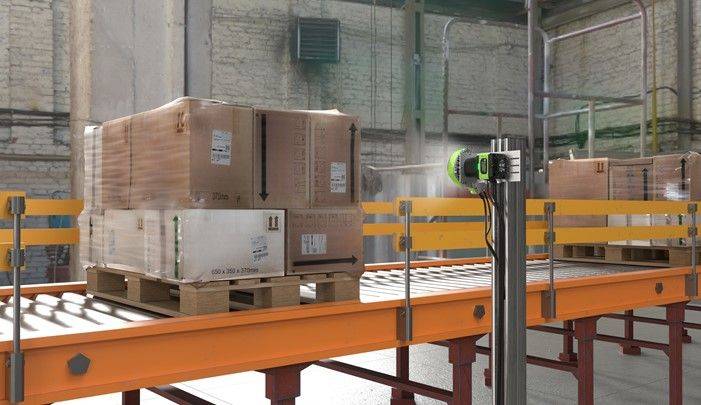
In modern production environments, where speed and quality must go hand in hand, machine vision has become an indispensable link. It enables companies to automatically detect whether products meet the desired specifications before they are packaged or shipped.
Manual inspection has been an integral part of quality processes for decades. However, products have become more complex and production speeds have increased. It is impossible for one person to assess hundreds of parts per hour in detail. Furthermore, human perception is not always consistent: what is “good enough” for one person may be questionable for another.
Machine vision does not necessarily replace humans, but enhances the process with objective, measurable control. When every second counts, and every product counts, machine vision offers a more reliable alternative – or an additional layer of certainty.
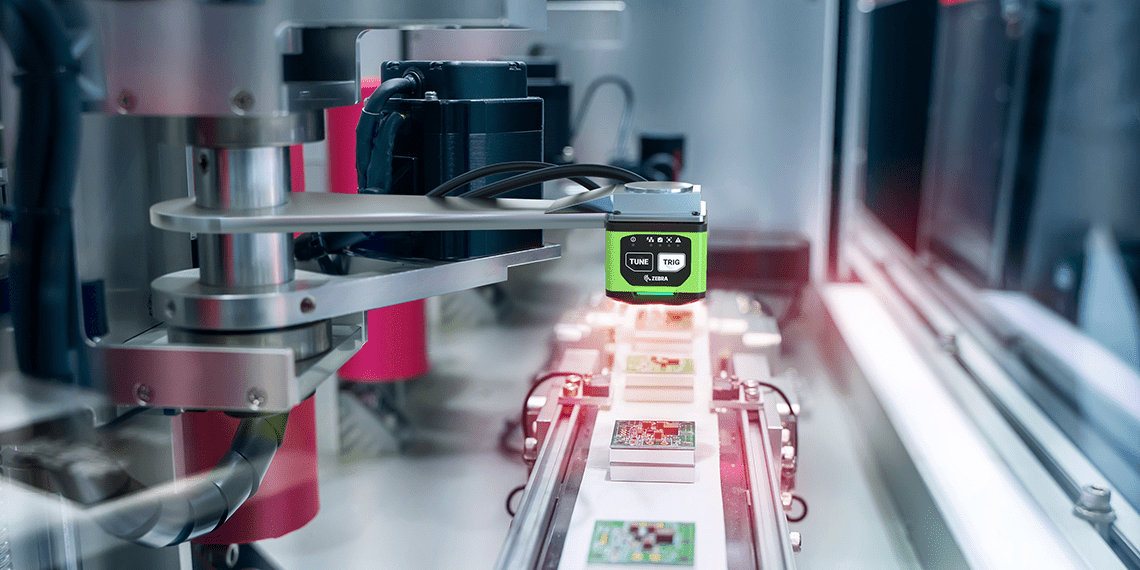
A machine vision system consists of a camera, a light source, and an intelligent processing unit. The camera captures an image of the product as it moves along the production line. The system compares that image with pre-set reference values. Is the label correct? Is the part positioned correctly? Is there any visible damage?
Based on this analysis, the system can automatically make decisions: send a signal to a robot, remove a defective product from the line, or log data for traceability. And all this happens in milliseconds, with high accuracy and complete repeatability.
From electronics to the food industry, from automotive to pharmaceuticals: machine vision and applications are widely applicable. Think of checking solder connections on printed circuit boards, measuring tolerances in metalworking, or verifying expiry dates on packaging. Wherever visual inspection is required, machine vision offers a scalable, efficient solution.
Machine vision is also becoming increasingly important in combination with robotics. Thanks to visual input, vision-guided robots can recognise, locate and correctly pick up parts, even if they are randomly positioned. In this way, machine vision also enables flexible automation.
At Simac PHI DATA, we believe that technology only becomes valuable when it delivers concrete results in the workplace. That is why we always start with the question: what problem do you want to solve? Is it quality control, positioning, fault detection or product recognition? Based on that analysis, we build a tailor-made solution with robust components, powerful software and smart integration.
The technologies we work with have been proven in industrial environments. They combine sharp imaging, intelligent interpretation and real-time responsiveness. In this way, we ensure that machine vision does not remain a theoretical concept, but a practical tool that adds value day in, day out.
Would you like to discover how machine vision can improve your production process? At Simac PHI DATA, we are ready to guide you – from analysis to implementation, with technology that works and pays off.
Are you looking for commitment and expertise? Together with Simac PHI DATA, you can take the next step towards a digital future!